
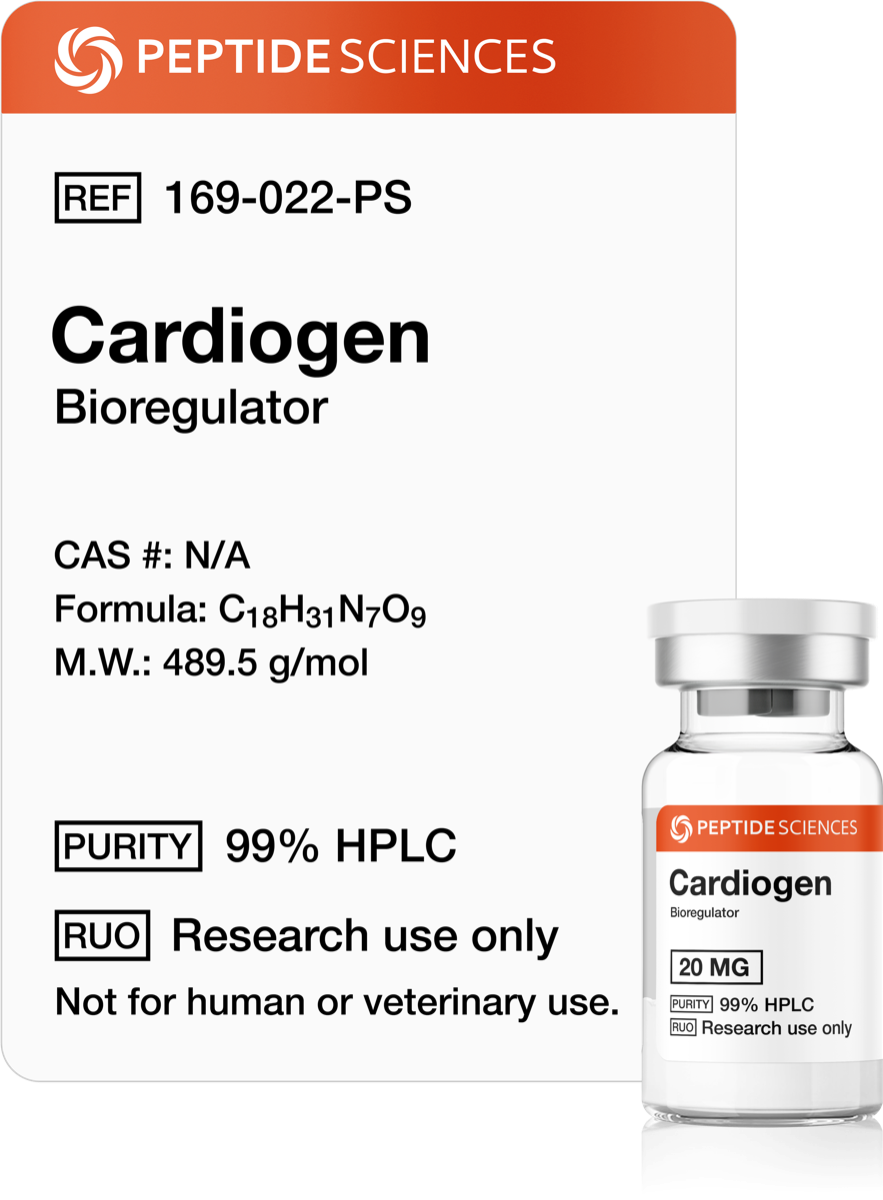
Cardiogen 20mg (Bioregulator)
$65.00
Cardiogen, is a bioregulator peptide which appears to have potent effects on multiple body tissues including the heart and prostate. Additionally, the peptide may be beneficial in the treatment of certain types of cancer, particularly sarcoma. Currently, the biggest benefits of cardiogen appear to be in the settings of heart attack, hypertension, and chronic heart failure where the peptide not only offers benefits of its own accord, but acts in a synergistic manner with established treatments.
Cardiogen 20mg (Bioregulator) – Research-Based Cardiovascular Peptide Support
Cardiogen 20mg (Bioregulator) is a synthetic tetrapeptide developed for advanced scientific research into cardiovascular health, cellular repair, and tissue regeneration. As part of the bioregulator peptide class, Cardiogen has gained attention for its targeted interaction with heart tissue at the genetic and cellular level.
This SEO-optimized product description highlights the latest research insights, mechanisms, and applications of Cardiogen 20mg in laboratory settings.
🧬 What Is Cardiogen 20mg?
Cardiogen is a short-chain bioregulator peptide composed of four amino acids (Ala-Glu-Asp-Arg), specifically studied for its effects on cardiac cells (cardiomyocytes) and fibroblasts.
It belongs to a class of peptides designed to:
- Regulate gene expression
- Support cellular communication
- Promote tissue-specific repair mechanisms
Unlike traditional compounds, Cardiogen works at the nuclear level, influencing how cells function and regenerate.
🔬 Key Research Findings on Cardiogen
🫀 Cardiovascular Tissue Repair & Regeneration
Research suggests Cardiogen may:
- Support heart muscle regeneration (cardiomyocytes)
- Reduce scar tissue formation (fibrosis)
- Improve overall cardiac tissue integrity
It is widely studied in models related to:
- Myocardial infarction (heart attack)
- Hypertension
- Chronic heart failure
🔄 Cellular Repair & Fibroblast Regulation
Cardiogen has shown the ability to influence fibroblast activity, which plays a key role in:
- Tissue repair
- Wound healing
- Scar formation
Studies indicate it may help normalize cellular signaling in aging tissues, improving repair efficiency.
🧪 Gene Expression & Protein Synthesis
One of the most significant research areas is Cardiogen’s role in epigenetic regulation:
- May bind to DNA regions within cells
- Influences gene expression pathways
- Can increase protein production by 2–5x in lab studies
👉 This mechanism is what makes bioregulators unique compared to standard supplements.
🛡️ Anti-Apoptotic & Cellular Protection Effects
Experimental data suggests Cardiogen may:
- Reduce cell death (apoptosis)
- Support cell survival under stress conditions
- Improve resilience of heart tissue
This is particularly relevant in studies involving aging and cardiovascular degeneration.
🧫 Emerging Research Areas
Beyond cardiovascular studies, Cardiogen is being explored for:
- Prostate tissue regulation and cellular signaling
- Potential anti-tumor mechanisms in sarcoma models
- General anti-aging and longevity research
⚙️ Mechanism of Action (Research Model)
Cardiogen operates through a bioregulatory peptide mechanism:
- Targets specific tissues (heart, fibroblasts)
- Interacts with cellular DNA
- Modulates gene expression
- Enhances protein synthesis and repair processes
This results in improved cellular function and tissue homeostasis in experimental models.
📦 Product Specifications
- Product Name: Cardiogen 20mg
- Type: Bioregulator Peptide
- Sequence: Ala-Glu-Asp-Arg (AEDR)
- Form: Capsules or lyophilized powder
- Purity: Typically ≥98% (lab-grade)
- Use: Research and laboratory studies only
👨🔬 Common Research Applications
Cardiogen 20mg is used in studies involving:
- Cardiovascular tissue regeneration
- Cellular aging and longevity
- Fibroblast activity and tissue repair
- Gene expression and epigenetics
- Peptide-based therapeutic modeling
⚠️ Important Disclaimer
- For research use only – not for human consumption
- Not approved as a medical treatment
- Research is ongoing and primarily preclinical
- Should only be handled by qualified professionals
💡 Final Thoughts
Cardiogen 20mg (Bioregulator) represents a promising area of peptide research focused on cardiovascular health, cellular repair, and gene regulation. With its unique ability to influence biological processes at the DNA level, it stands out as a next-generation research peptide in the field of bioregulation.
As scientific interest in peptide-based therapies grows, Cardiogen continues to be studied for its potential role in heart tissue regeneration, aging, and systemic cellular balance.
Only logged in customers who have purchased this product may leave a review.
Related products
Bioregulators
Bioregulators
Bioregulators
Bioregulators
Bioregulators
Bioregulators
Bioregulators
Bioregulators
Reviews
There are no reviews yet.